
Caring about tea means noticing everything that shapes it. The soil, the weather, and the hands that guide the leaves from field to cup. To care is to slow down, to listen, and to see how time and labor create flavor. It is an act of attention as much as appreciation.
What caring about tea really means
Every leaf begins with a person. A skilled picker can tell by touch which leaf is ready. That knowledge is not learned quickly. It is carried in memory, passed from one generation to another.
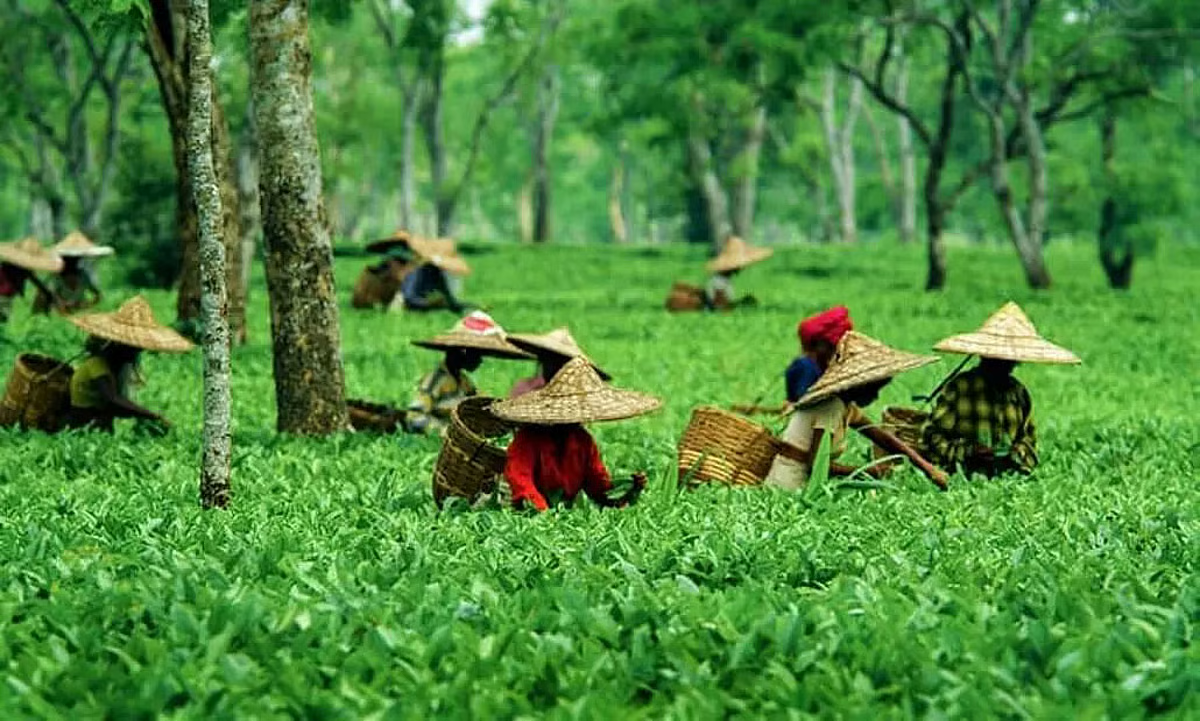
In Assam, women move quietly through rows of green before sunrise, baskets tied across their shoulders. In Rwanda, younger workers learn from elders who read ripeness by feel. In Japan, technology supports the harvest, yet people still decide when the moment is right.
When people speak of terroir, they often talk about soil and rain. Yet the human element belongs there too. The rhythm of a worker’s hands shapes taste as much as the season does. Therefore, to care about tea means caring about those whose skill gives the plant its voice.
How care is expressed through language
Modern marketing uses the language of care easily but practices it less often. Words like “heritage” or “handcrafted” sound noble, yet they can lose meaning when repeated without truth.
Real care shows in consistent choices. It appears in farms that protect soil instead of exhausting it. It lives in growers who keep old tea varieties alive despite lower yields. It exists in fair pay that allows families to remain on their land.
A tea taster also shows care. Long hours at the table, comparing taste and memory, protect the quality of every batch. Care is not a slogan. It is a discipline that repeats itself every day.
Why attention sustains care
Tea now travels the world, yet many who grow it still live with very little. Consumption rises, but income falls. A single box of tea bags can represent hundreds of hours of unseen work.
To care about tea means to notice the connection between your comfort and another person’s labor. This awareness does not take away joy. Instead, it deepens it. When you know the effort behind your tea, you drink with more respect and gratitude.
The craft that connects every culture
Across the world, tea appears in many forms. Japan has chanoyu. China has gongfu. Britain has its afternoon ritual. Each culture expresses the same values in a different way.
Caring about tea means valuing this craft. It is the grower watching oxidation unfold slowly. It is the roaster who stops the fire at the perfect second. It is the drinker who realises that a small change in temperature can shift a cup from sharp to smooth.
Observation leads to understanding, and understanding strengthens care.
The privilege of being able to care
True care also requires honesty about privilege. Some teas cost what others earn in a full day of work. The finest gardens thrive because not everyone shares equal opportunity.
Acknowledging that reality does not weaken appreciation. Instead, it builds perspective. The future of tea depends on shared responsibility. Buyers must pay fairly. Companies must stay transparent. Drinkers must choose with awareness.
Care can only grow when fairness grows with it.
How care becomes culture
At Pluck, care defines how we write and how we listen. We approach tea the way growers talk about weather: with respect for what cannot be controlled and curiosity for what can be improved.
Care belongs in every stage of tea’s life. It lives in the soil, the harvest, the roast, and the pour.
Tea deserves better conversation. It deserves honesty that reaches beyond adjectives and tasting notes. When we call a tea floral or bright, we describe only the surface.
The real story begins long before the first sip.
FAQ
What does it mean to care about tea
It means respecting the full process behind every cup, from how it is grown and picked to how it is brewed and shared.
Why is care important in tea?
Because tea depends on both people and nature. Real care protects the environment, rewards labor fairly, and improves quality.
How can drinkers show care?
By learning where their tea comes from, choosing transparent producers, and valuing ethical sourcing over marketing.
What makes care different from expertise?
Expertise focuses on facts and precision. Care adds empathy, awareness, and long-term respect for those who make tea possible.
Discover more from pluck
Subscribe to get the latest posts sent to your email.

